Pressure, pore size and fouling
Membrane processes differ mainly in how small the holes are, and everything else follows from that.
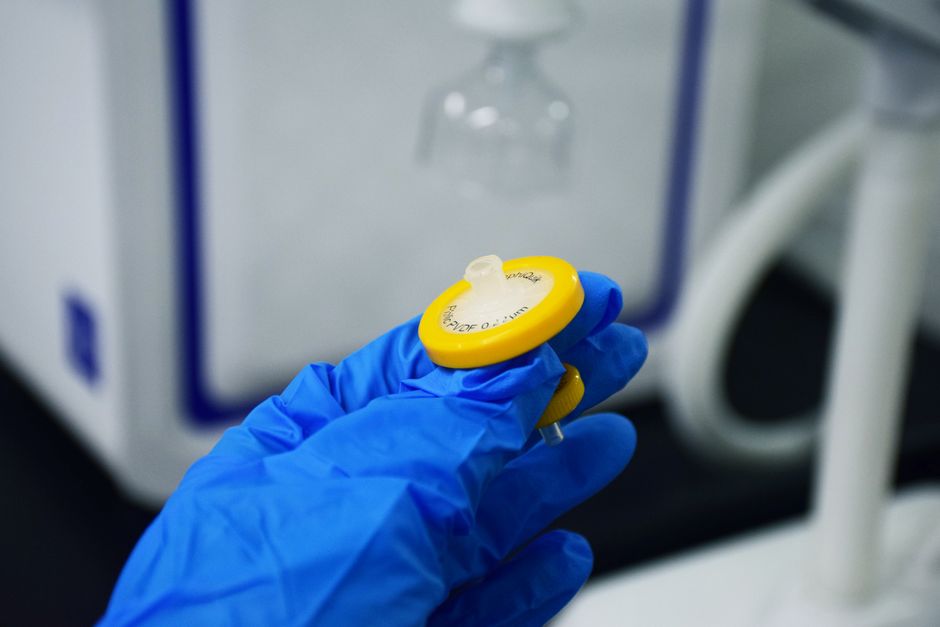
The ladder
Microfiltration stops suspended solids and most bacteria. Ultrafiltration goes further, holding back viruses and large organic molecules. Nanofiltration begins to reject divalent ions — useful for softening without a resin. Reverse osmosis rejects nearly everything, including the dissolved salts, at the cost of substantially more pressure.
Fouling is the real operating cost
A membrane does not usually fail; it clogs. Particles, scale and biological growth accumulate on the surface, pressure rises to maintain the same flow, energy cost climbs, and eventually the module has to be cleaned or replaced. Pre-treatment exists almost entirely to delay this.
Recovery and the concentrate
Everything held back leaves as a concentrated waste stream. Pushing recovery higher looks efficient on paper and makes that stream dirtier and harder to handle. The sensible operating point is rarely the maximum one.
Cleaning is part of the design
Every membrane installation needs a cleaning regime decided before commissioning, not improvised after the first pressure alarm. Which chemicals, at what concentration, how often, and what the downtime costs — these determine the real capacity of the system far more than the nameplate flow rate does. A plant sized without cleaning time in the calculation is undersized.